
Essential foundations in a connected world
In an era of rapid digitalization and omnipresent cyber threats, building cyber competency is indispensable for security authorities such as the Austrian Federal Ministry of the Interior (BMI). Likewise, organizations must develop cyber competency to effectively protect their digital infrastructure and meet the challenges of an increasingly connected world. Cyber competency here means far more than technical expertise – it encompasses an understanding of digital developments, the associated challenges, as well as the possibilities and limitations of cybersecurity and the fight against and containment of cybercrime.
Changing Framework Conditions
Digitalization has fundamentally transformed traditional policing over the past 20 years. Factors such as anonymity, exponentially growing volumes of data, and increased complexity in digital evidence collection present new challenges. While the focus was once on individual types of offenses, today virtually every case has touchpoints with digital storage media. This requires high-performance IT systems, specialized software, and a continuously growing level of technical expertise among staff.
Scope and Significance of Cyber Competency
In the context of a security authority, cyber competency refers, for example, to the understanding of
- developments,
- challenges, as well as
- the possibilities and limitations of digitalization
in relation to cybersecurity and combating cybercrime. It is crucial that not only IT specialists but all employees develop a fundamental understanding of digital risks. A strong security culture begins with leadership, who must act as role models and foster “internal awareness.”
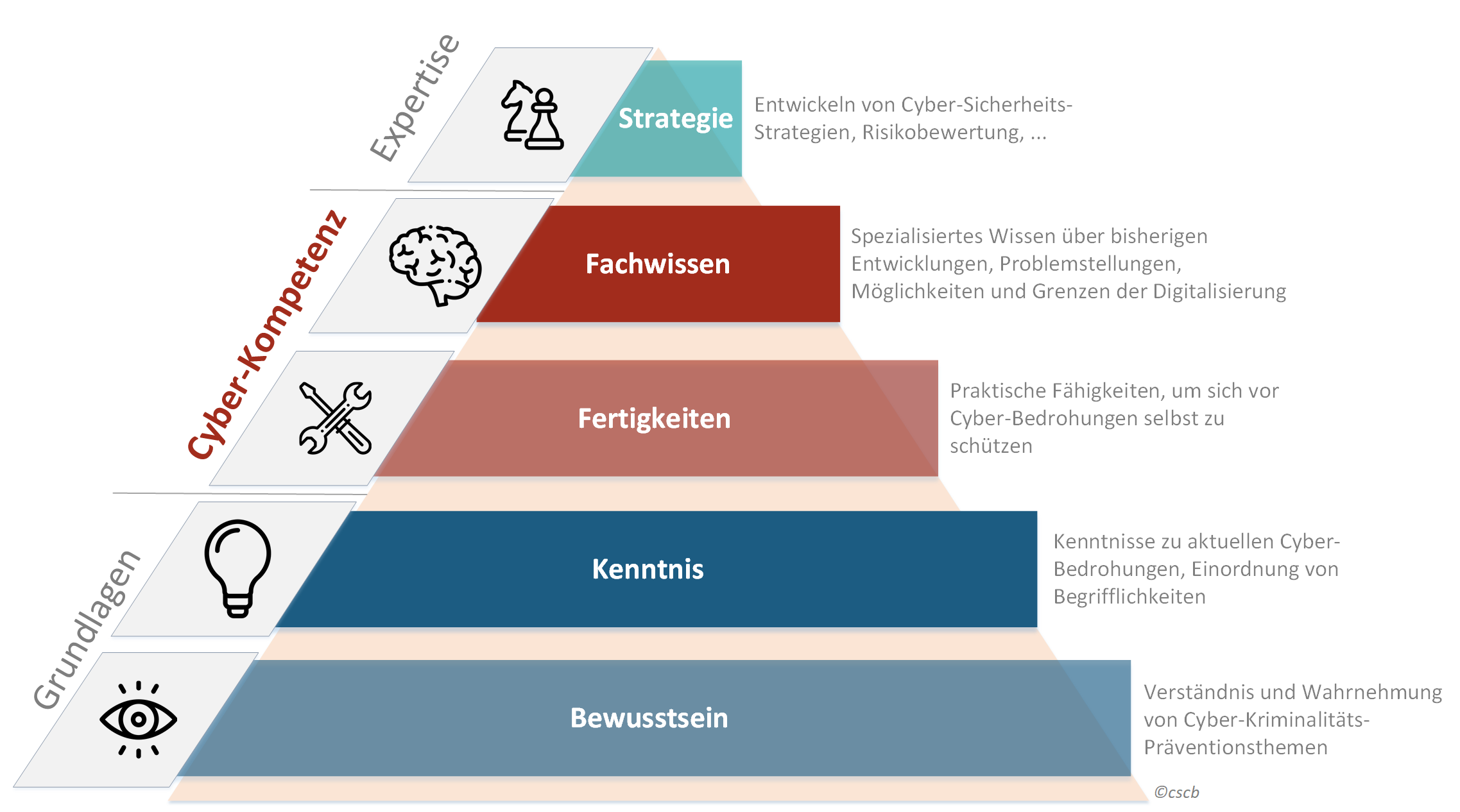 Figure 1: Cyber competency in context
Strategies for Strengthening Cyber Competency
To sustainably promote this expertise within the BMI, various approaches are pursued:
- Targeted cyber recruiting and career changers: Early identification and targeted outreach to potential specialists with relevant prior knowledge.
- Specialized training and continuing education: Regular training sessions, certifications, simulation exercises, and awareness campaigns to continuously expand knowledge.
- Interdisciplinary collaboration: Cooperation between different departments and the involvement of experts from industry and academia help meet the growing demands.
- Pilot projects as best practice: For example, the 24/7 Provincial IT Service in Carinthia demonstrates how continuous support in acute cybercrime cases and forensically sound procedures can be used to build practical cyber competency.
Leadership and Security Culture
Leaders in public authorities must be able to understand technical fundamentals and risk assessments to make informed decisions. Their role as exemplars is crucial for establishing an organization-wide security culture. Only with a profound understanding of cyber threats and corresponding continuing education can they effectively address digital challenges and thereby ensure the protection of the organization and its staff.
Outlook
As digitalization continues to advance and cyber threats evolve, the need for cyber competency will continue to grow. Beyond new technologies such as artificial intelligence and machine learning, additional opportunities – but also new challenges – are emerging. It is therefore imperative to continuously invest in training and the expansion of internal resources to ensure the long-term protection of data, systems, and people.
This comprehensive approach ensures that cyber competency is understood not merely as a technical challenge but as an organization-wide responsibility – a decisive success factor, including in modern law enforcement.
Those who want to read more can find the full article in the Austrian magazine for public security: BMI Magazine 09-10/2023